


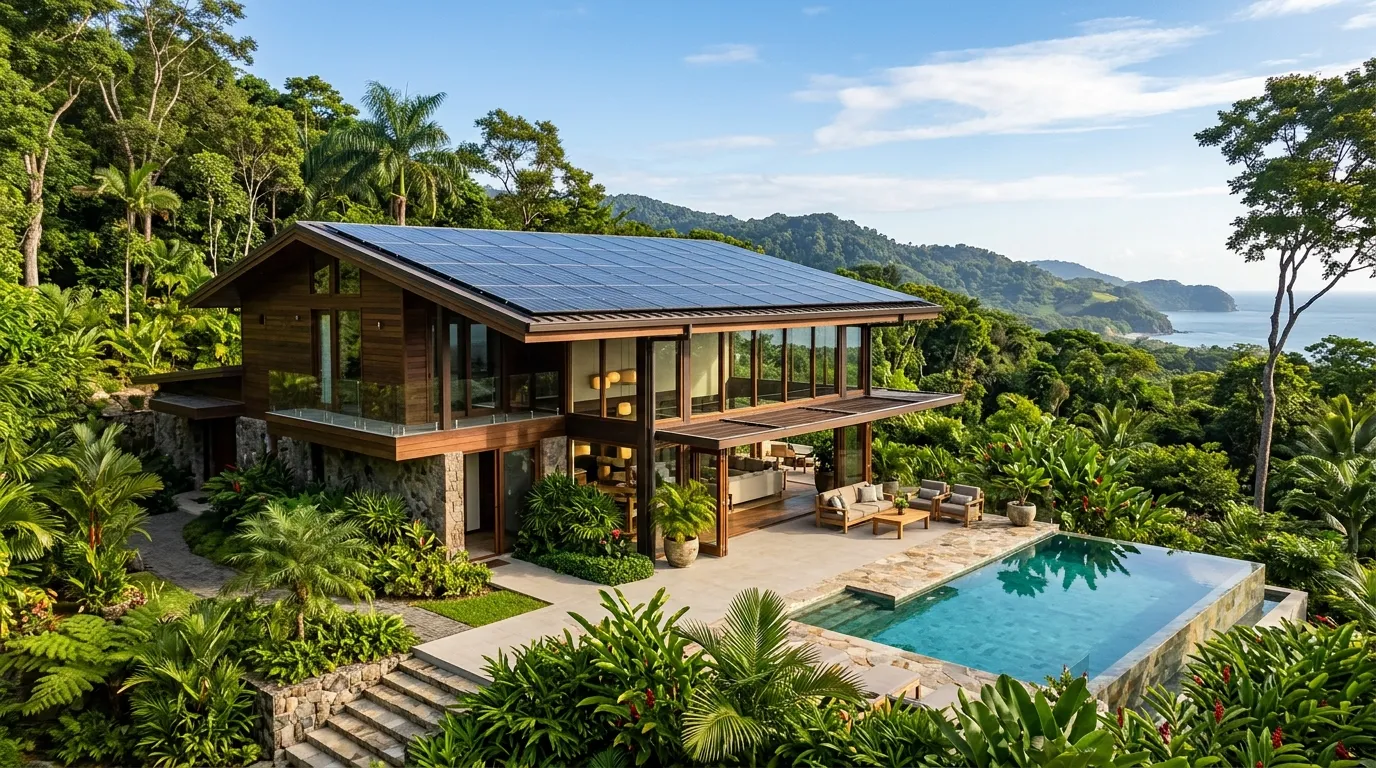
Luxury travel is changing. Today’s most discerning travelers want more than thread counts and ocean views — they want their comfort to come with a conscience. Eco-friendly luxury villas have emerged as the answer, proving that world-class hospitality and genuine environmental responsibility can not only coexist but elevate each other beautifully.
This article explores everything you need to know about eco-friendly luxury villas — from what makes a property truly sustainable to how to choose the right one for your next retreat. You will discover the key green features to look for, how top villa destinations around the world are leading the way, what mistakes travelers make when booking, and expert guidance on getting the most from a sustainable luxury stay.
What Makes a Luxury Villa Truly Eco-Friendly
The word “eco” gets used loosely in travel marketing. A property with a recycling bin and bamboo towels is not the same as one that has genuinely reimagined its relationship with the environment. Understanding the difference matters — both for the planet and for the quality of your experience.
A truly eco-friendly luxury villa operates across multiple dimensions of sustainability. It minimizes its energy consumption through renewable sources, manages water responsibly, reduces waste systematically, sources food and materials locally, and actively contributes to the ecological health of the surrounding landscape. It also tends to support the economic well-being of the local community, recognizing that environmental sustainability and social sustainability are inseparable.
Third-party certifications offer the most reliable signal. The Global Sustainable Tourism Council sets internationally recognized criteria that cover environmental, social, and economic sustainability. LEED certification from the U.S. Green Building Council addresses structural and systems-level sustainability in buildings. EarthCheck, widely used across luxury hospitality, benchmarks properties against rigorous operational standards. When a villa carries one of these credentials, you know the sustainability claims have been externally validated rather than self-declared.
The physical architecture itself often tells the story. Sustainable luxury villas frequently use natural building materials — reclaimed wood, local stone, bamboo, rammed earth — that reduce embodied carbon and connect the structure visually and thermally to its surroundings. Passive design principles minimize the need for mechanical heating and cooling. Large overhangs, cross-ventilation, thermal mass, and strategic landscaping do much of the work that air conditioning would otherwise handle.
What separates truly eco-friendly properties from greenwashed ones is the integration of all these elements into a coherent, managed system. The best villas track their carbon footprint, set reduction targets, and share progress with guests. That transparency is itself a mark of authenticity.
Key Sustainable Features to Look for in a Green Villa
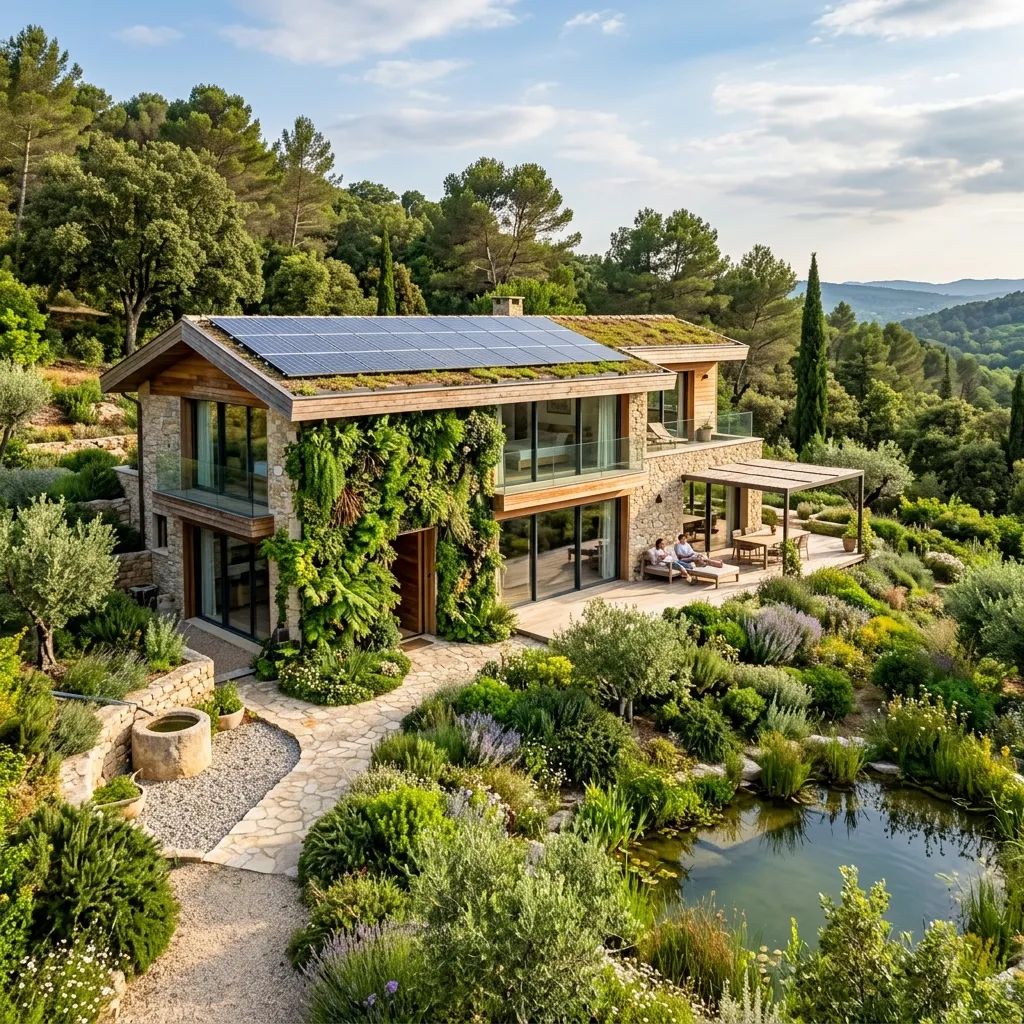
When evaluating eco-friendly luxury villas for a stay, knowing which features signal genuine sustainability helps you make a smarter, more satisfying choice. Not all green features carry equal weight, and understanding their relative importance helps you prioritize.
Renewable Energy Systems
Solar photovoltaic panels are the most visible sign of energy sustainability, but what matters is how comprehensively a villa relies on renewable power. The best properties generate the majority of their electricity on-site through solar, micro-hydro, or wind systems and store excess energy in battery systems for nighttime use. Some villas in particularly sunny locations achieve near-full energy independence, eliminating their reliance on fossil fuel grid electricity entirely.
Energy efficiency complements generation. LED lighting throughout, smart thermostats, inverter-driven appliances, and well-insulated construction dramatically reduce the amount of energy needed in the first place. A villa that uses half the energy of a conventional property and generates all of that from solar is far greener than one with a rooftop garden and a diesel generator.
Water Conservation and Management
Water scarcity affects many of the world’s most beautiful villa destinations — Bali, the Mediterranean, the Caribbean, and coastal Mexico among them. Responsible villas treat water as the precious resource it is. Rainwater harvesting systems collect and filter rainfall for non-potable uses. Greywater recycling systems treat wastewater from sinks and showers for garden irrigation. Low-flow fixtures reduce consumption without sacrificing the high-pressure shower experience guests expect.
In destinations where fresh water is particularly stressed, the most forward-thinking properties invest in atmospheric water generation or sophisticated filtration systems that eliminate the need for single-use plastic water bottles while providing guests with clean, chilled drinking water throughout their stay.
Local Sourcing and Zero-Waste Kitchens
Food is one of the most overlooked dimensions of villa sustainability. A kitchen that sources ingredients from local farms, fishing communities, and organic growers dramatically reduces the carbon footprint of every meal while producing food that is fresher, more seasonal, and more connected to the culture of the destination.
Zero-waste kitchen practices — composting food scraps, eliminating single-use plastics, using reusable glass and stainless containers — reduce landfill contributions significantly. Some villas maintain their own kitchen gardens, growing herbs, vegetables, and edible flowers on the property. This closes the loop between what guests eat and what the land produces, creating a deeply meaningful connection to place that no conventional luxury hotel can replicate.
Top Eco-Friendly Luxury Villa Destinations Around the World
Geography shapes what eco-friendly luxury looks like. A sustainable villa in Costa Rica operates differently from one in Tuscany or Bali, reflecting the specific ecological, cultural, and climatic context of each destination. Exploring the world’s leading eco-luxury villa regions reveals the remarkable diversity this travel style encompasses.
Costa Rica: The Gold Standard of Eco-Luxury
Costa Rica has long been the global benchmark for sustainable tourism. The country generates over 99 percent of its electricity from renewable sources and has committed to carbon neutrality. Its network of national parks, cloud forests, and coastlines provides a spectacular backdrop for private villa experiences that are embedded in nature rather than imposed upon it.
The country’s Certificate for Sustainable Tourism program rates properties on a strict scale, and the highest-rated villas in destinations like the Osa Peninsula, Guanacaste, and the Nicoya Peninsula offer extraordinary levels of both luxury and ecological integrity. Guests can wake to the sound of howler monkeys, explore primary rainforest, and return to an infinity pool heated by solar energy — all within properties that actively protect the biodiversity around them.
Bali: Spiritual Sustainability in a Cultural Landscape
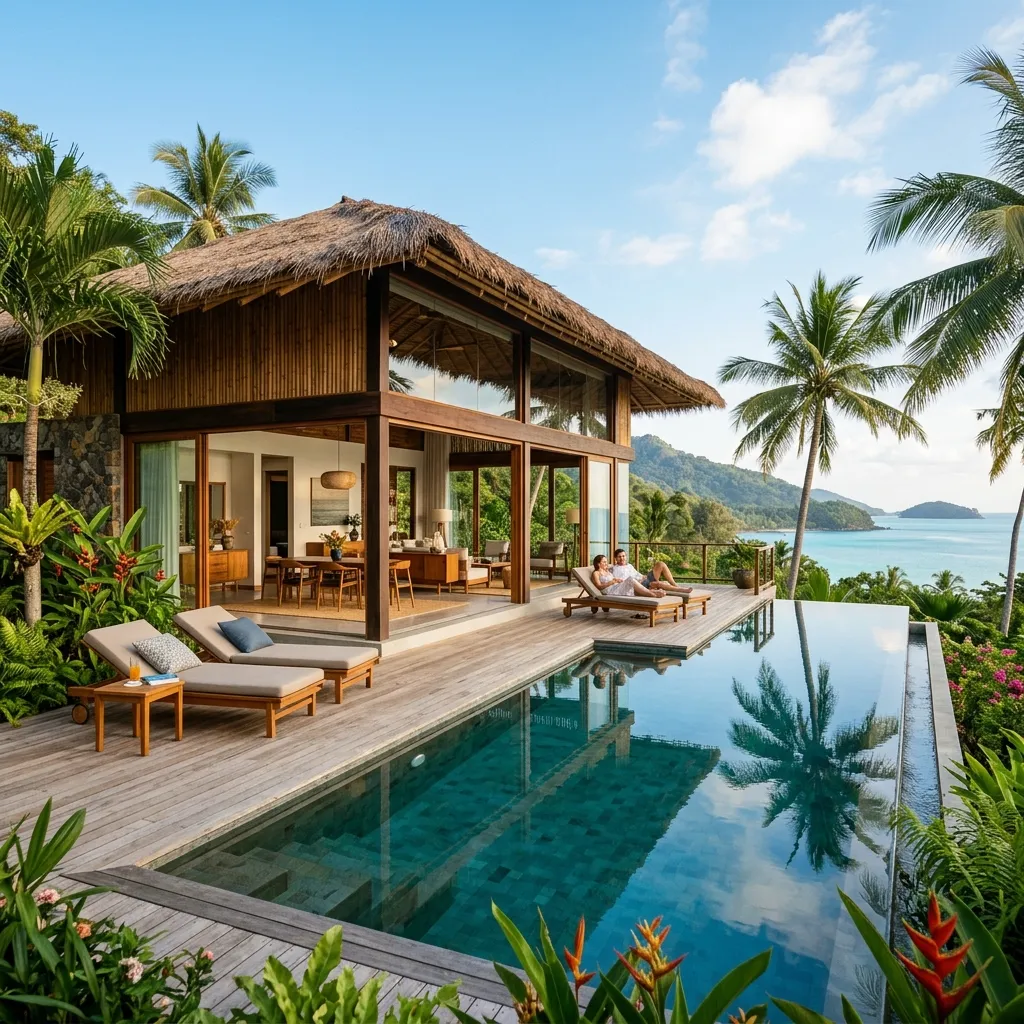
Bali occupies a unique position in eco-luxury travel. Its deeply rooted cultural and spiritual traditions around harmony with nature inform a philosophy of sustainability that goes beyond technical systems. Many of Bali’s most celebrated eco-villas in regions like Ubud and Sidemen are built using traditional Balinese construction methods — hand-carved stone, alang-alang grass roofing, open pavilion structures that breathe with the tropical climate.
These villas often partner with local farming communities, support traditional artisans, and incorporate Balinese wellness rituals into their guest experience. Sustainability here is inseparable from cultural preservation, making a stay in a thoughtfully conceived Balinese eco-villa a genuinely holistic experience.
Tuscany and the Mediterranean: Agritourism and Heritage Sustainability
In the Mediterranean, eco-friendly luxury takes the form of restored farmhouses, ancient stone masserie, and agriturismo estates that sustain traditional landscapes through agricultural practice. Olive groves, vineyards, and kitchen gardens are not decorative backdrops — they are working systems that feed guests, support local economies, and maintain the biodiversity of cultivated landscapes that have ecological significance in their own right.
The Tuscany Region’s agritourism certification program recognizes properties that meet agricultural and environmental standards. Top-rated agriturismo villas produce their own wine, olive oil, honey, and vegetables while offering accommodation of extraordinary refinement in settings of profound beauty.
Eco-Friendly Luxury Villas vs. Conventional Luxury Villas: A Structured Comparison
Understanding how these two categories of accommodation compare helps you calibrate your expectations and make an informed choice.
|
Feature |
Eco-Friendly Luxury Villa |
Conventional Luxury Villa |
|---|---|---|
|
Energy source |
Solar, wind, or micro-hydro; low consumption |
Grid electricity; often high consumption |
|
Water management |
Rainwater harvesting, greywater recycling, low-flow fixtures |
Standard plumbing; variable efficiency |
|
Construction materials |
Natural, local, reclaimed, or low-carbon |
Often conventional concrete and imports |
|
Food sourcing |
Local farms, kitchen gardens, seasonal menus |
Variable; often imported premium products |
|
Waste management |
Composting, zero-waste protocols, plastic elimination |
Standard disposal; variable recycling |
|
Certification |
GSTC, LEED, EarthCheck, or national eco-labels |
Generally uncertified |
|
Guest experience |
Nature-immersive, culturally connected, meaningful |
Comfort and luxury focused; less contextual |
|
Price point |
Premium to ultra-premium; justified by impact |
Premium to ultra-premium |
|
Community impact |
Actively supports local economies and conservation |
Variable; often lower local engagement |
|
Carbon footprint |
Significantly lower per stay |
Typically higher per stay |
This comparison reveals something important: eco-friendly luxury villas do not require trade-offs in comfort or refinement. They add layers of meaning and purpose that conventional luxury cannot offer, while often delivering a more distinctive and memorable experience.
How to Choose the Right Eco-Friendly Luxury Villa for Your Trip
Choosing the right property requires more than scanning sustainability claims on a booking platform. A structured approach ensures you find a villa that genuinely matches your values, travel style, and specific needs.
Research Certifications and Verification
Start with certification. Look for properties that carry recognized third-party sustainability credentials rather than relying on self-declared “eco” labels. The GSTC, EarthCheck, Rainforest Alliance, and national certification programs like Costa Rica’s CST provide meaningful external validation. Cross-reference what a property claims with reviews from sustainability-focused travel publications and platforms that apply rigorous editorial standards.
Align the Villa’s Ethos With Your Travel Goals
Are you seeking a wellness retreat, a cultural immersion, a family adventure, or a romantic escape? The best eco-luxury villas have a clear identity and philosophy that runs through every aspect of the experience — from the architecture and landscape to the food, activities, and staff interactions. Choosing a villa whose ethos aligns with your travel purpose produces a far more coherent and fulfilling experience than simply booking the property with the most solar panels.
Consider Location and Transport Impact
The carbon footprint of getting to a villa can easily outweigh the sustainability gains of staying there. If you fly internationally to reach a private eco-villa, consider extending your stay to distribute the flight’s carbon impact over more days and explore carbon offset programs. Some destinations, particularly in Europe, are accessible by high-speed rail, which dramatically reduces the transport carbon equation. Choosing a destination closer to home, or one you can reach overland, amplifies your positive environmental impact considerably.
Common Mistakes to Avoid When Booking an Eco-Friendly Luxury Villa
Even well-intentioned travelers can undermine their sustainability goals through common booking and behavioral mistakes. Avoiding these pitfalls helps you travel with genuine impact.
Trusting self-declared eco labels without verification. The hospitality industry has a greenwashing problem. Properties use terms like “eco,” “green,” and “sustainable” freely and without external accountability. Always look for recognized third-party certifications or independent editorial reviews before booking.
Prioritizing aesthetics over substance. A villa with a beautiful natural setting, open-air design, and wooden furniture may look eco-friendly without meeting any meaningful sustainability standard. Sustainable luxury requires operational systems — energy, water, waste, sourcing — not just visual cues.
Ignoring the transport footprint. Choosing a certified eco-villa and then flying halfway around the world to reach it on a short weekend trip creates a deeply unbalanced carbon equation. Think holistically about the total environmental impact of your journey, not just the accommodation portion.
Overlooking community and social sustainability. Environmental sustainability without social sustainability is incomplete. Look for properties that employ local staff, pay fair wages, source from local producers, and invest in community programs. The best eco-luxury villas are assets to their surrounding communities, not just environmentally managed enclaves.
Assuming eco means basic. Some travelers avoid eco-friendly villas expecting discomfort, limited amenities, or a camping-adjacent experience. The best properties in this category compete with the finest conventional luxury accommodation in every meaningful way, adding sustainability as a dimension of excellence rather than a constraint.
Failing to engage with the property’s sustainability program. Many eco-luxury villas offer guest-facing sustainability activities — farm tours, reforestation planting, cooking classes using garden produce, guided nature experiences. Engaging with these programs deepens your experience enormously and creates memories far more vivid than passive luxury alone.
Expert Insights: What Sustainable Travel Leaders Say About Eco-Luxury Villas
People who study and shape sustainable luxury travel consistently emphasize a few themes that deserve a prominent place in any honest guide to this topic.
Sustainability enhances, not diminishes, the luxury experience. The most celebrated voices in sustainable hospitality — from Jetsetter’s editorial team to the writers at Condé Nast Traveler’s Sustainability section — consistently note that the world’s most memorable luxury experiences now involve connection: to landscape, to culture, to community, and to purpose. A villa that actively engages guests with the natural and human systems around it creates a depth of experience that passive luxury cannot approach.
Transparency is the new luxury amenity. Leading eco-luxury properties share their sustainability data openly — energy consumption, water use, waste diversion rates, carbon emissions. This transparency signals confidence and authenticity. Properties that can tell you precisely how they are reducing their impact and what progress they have made earn a different kind of trust from guests than those who rely on aspirational language without evidence.
The architecture tells you more than the marketing. Sustainable design is hard to fake at scale. A villa built with site-appropriate materials, passive climate control, and minimal mechanical intervention demonstrates genuine commitment through its physical structure. When a property’s design logic, its construction, and its operational systems are all aligned with sustainability, the result is unmistakable — and unmistakably luxurious in the deepest sense.
Seek out properties committed to ecological regeneration, not just footprint reduction. The frontier of eco-luxury travel has moved beyond minimizing harm to actively improving the ecological health of a place. Properties that fund reforestation, restore degraded land, create wildlife corridors, or support marine conservation are participating in something more ambitious and more meaningful than sustainability as damage control. These regenerative properties represent the highest expression of what eco-friendly luxury villas can be.
Long stays amplify your positive impact. Sustainable travel advocates consistently emphasize the value of slow travel — staying longer in fewer places rather than moving quickly across many destinations. A two-week stay at an eco-friendly villa generates a richer experience, a more meaningful connection to place, and a far better carbon-to-experience ratio than five short trips to five different destinations in the same year.
The Future of Eco-Friendly Luxury Villas
The eco-luxury villa sector is evolving faster than almost any other segment of hospitality. Several important trends are shaping where it is heading over the next decade.
Regenerative Design and Net-Positive Properties
The leading edge of sustainable luxury has moved from net-zero to net-positive. Rather than simply minimizing environmental impact, the most forward-thinking properties now aim to generate more ecological value than they consume. This means active reforestation programs, biodiversity enhancement, soil restoration, and watershed regeneration built into the property’s operating model.
Net-positive villas represent a profound philosophical shift in how luxury hospitality relates to the natural world — from extraction and conservation to regeneration and co-creation. Guests at these properties participate in something genuinely transformative, returning home with a different relationship to the places they have visited.
Biophilic Design and Nature Integration
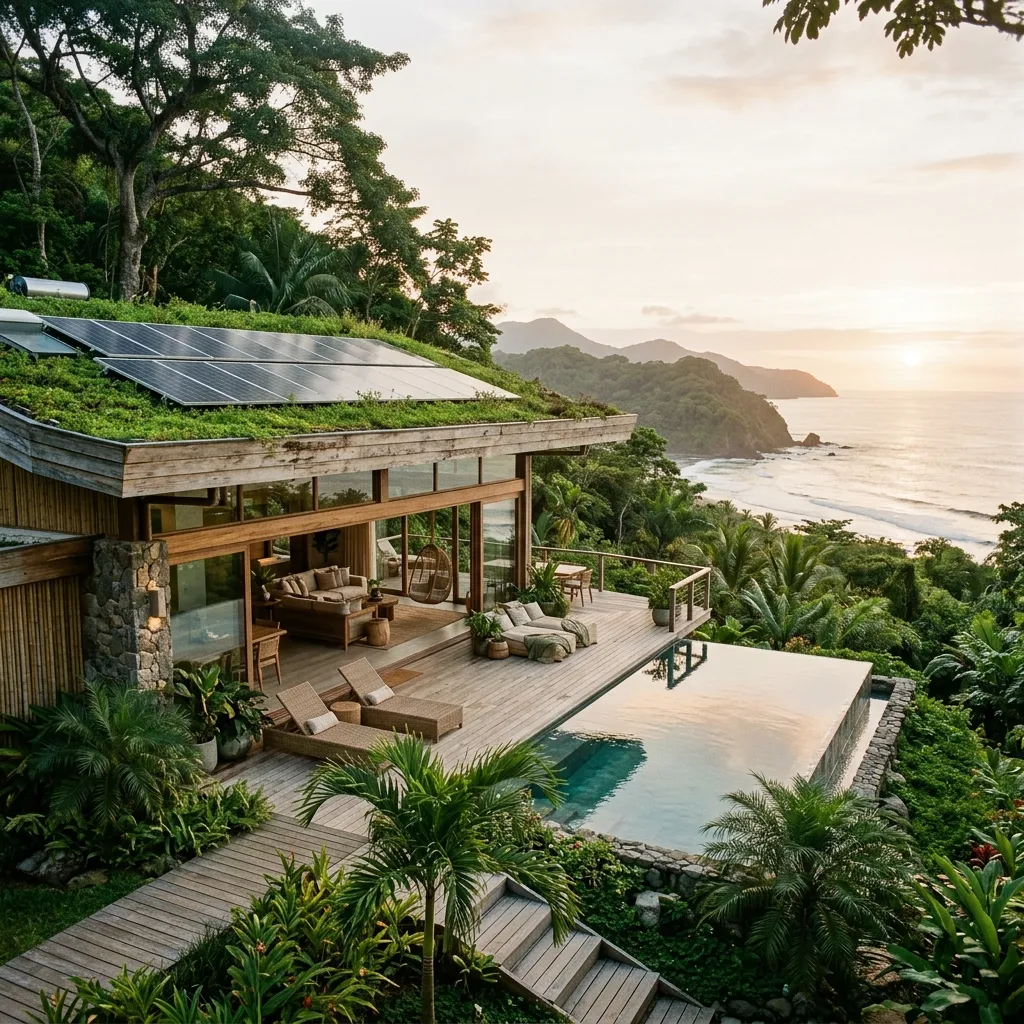
Biophilic design — the intentional integration of natural elements, living systems, and nature-inspired patterns into built environments — is becoming a defining characteristic of the finest eco-luxury villas. Living green walls, indoor water features, natural material palettes, and direct sensory connections to the surrounding landscape are not decorative choices. They reflect a growing body of evidence, well-documented by researchers at institutions like the University of Exeter, that human well-being is profoundly influenced by contact with nature.
For guests at eco-friendly luxury villas, biophilic design translates to measurable benefits: lower stress, better sleep, improved mood, and a heightened sense of restoration. This is luxury that works at a neurological level, not just an aesthetic one.
Technology-Enabled Sustainability
Smart home technology is increasingly being deployed in service of sustainability at luxury villa properties. Energy management systems that optimize solar generation and battery storage in real time, smart irrigation systems that respond to soil moisture and weather data, and AI-driven waste sorting systems are reducing the operational footprint of eco-luxury properties while maintaining or improving the guest experience. The intersection of high technology and deep ecology is producing some of the most sophisticated and impressive hospitality experiences in the world.
The Rise of Conservation-Funded Villa Models
Some of the most innovative eco-luxury villas now operate within a conservation funding model, where a portion of every stay directly funds habitat protection, species recovery, or community conservation programs. Properties in Kenya, southern Africa, and parts of Latin America pioneered this model in the context of safari lodges, and it is now spreading to villa-style accommodation in biodiversity-rich destinations worldwide. Staying at such a property means your travel directly contributes to outcomes that matter — a powerful addition to the luxury proposition.
Conclusion
Eco-friendly luxury villas have redefined what it means to travel well. They prove that the finest experiences — the most beautiful settings, the most refined comforts, the most meaningful connections — are fully compatible with genuine environmental responsibility. If you are ready to travel in a way that enriches both your life and the world around you, start exploring eco-friendly luxury villas today. Your next extraordinary retreat is waiting.
Frequently Asked Questions
1. What exactly are eco-friendly luxury villas?
Eco-friendly luxury villas are high-end private accommodation properties that combine premium comfort, design, and service with substantive environmental sustainability practices. These include renewable energy systems, water conservation measures, local food sourcing, waste reduction programs, and sustainable construction. The best properties hold recognized third-party certifications and actively engage guests in their sustainability mission while delivering an experience that matches or exceeds conventional luxury standards.
2. Are eco-friendly luxury villas more expensive than regular luxury villas?
Eco-friendly luxury villas occupy a similar price range to conventional luxury villas, typically sitting at the premium to ultra-premium end of the market. Some certified eco-properties carry a slight premium reflecting the investment in sustainable systems and certification processes. However, many travelers find the added dimensions of meaning, authenticity, and experience quality well worth the comparable or marginally higher cost. The value equation extends beyond the villa itself to include the broader positive impact of your stay.
3. How do I verify that a villa’s eco claims are genuine?
Look for recognized third-party certifications such as GSTC (Global Sustainable Tourism Council), EarthCheck, LEED, or national eco-labels like Costa Rica’s Certificate for Sustainable Tourism. Supplement this with reviews from credible sustainability-focused travel publications, direct questions to the property about their specific practices and measurable outcomes, and skepticism toward properties that use eco language without concrete evidence or external verification.
4. What are the most important sustainability features in a luxury villa?
The most impactful features are renewable energy generation (particularly solar), comprehensive water conservation systems including rainwater harvesting and greywater recycling, local food sourcing and zero-waste kitchen practices, sustainable construction materials, and active community engagement and support. Properties that excel across all these dimensions — rather than excelling in one and neglecting others — deliver the most genuine and holistic eco-luxury experience.
5. Which countries offer the best eco-friendly luxury villa experiences?
Costa Rica, Bali (Indonesia), Italy (particularly Tuscany and Sicily through agritourism models), Sri Lanka, Portugal, New Zealand, and parts of southern Africa consistently produce the world’s finest eco-luxury villa experiences. Each offers a distinctive blend of natural beauty, cultural depth, and sustainability infrastructure. The best choice depends on your travel goals, the time of year, and how far you want to travel relative to your broader carbon footprint considerations.
6. Can eco-friendly villas really match conventional luxury in terms of comfort?
Absolutely. The finest eco-friendly luxury villas compete directly with the world’s best conventional luxury accommodation in terms of design quality, bedding, amenities, food, staff service, and overall guest experience. In many cases they exceed conventional luxury on experiential dimensions — the sense of place, the quality of natural materials, the meaningfulness of the food sourcing story, and the depth of connection to the surrounding landscape — that conventional properties cannot replicate.
7. What is greenwashing in the context of luxury villas?
Greenwashing refers to the practice of making misleading sustainability claims without substantive environmental action to support them. In the luxury villa context, it often takes the form of using “eco” or “green” terminology in marketing while making only superficial gestures — providing recycling bins, using bamboo décor, or planting a few trees — without implementing meaningful operational sustainability systems. The most reliable protection against greenwashing is insisting on third-party certification and asking properties direct, specific questions about measurable outcomes.
8. How does staying at an eco-friendly luxury villa reduce my travel carbon footprint?
Eco-friendly villas reduce your accommodation-related carbon footprint through lower energy consumption (achieved via efficiency and renewables), reduced water waste, local food sourcing that eliminates long-distance food transportation emissions, and minimal waste generation. The accommodation portion of a villa stay can represent a genuinely low-carbon experience. The most significant remaining variable in your total trip footprint is typically transportation, particularly if you fly internationally to reach the property.
9. What activities do eco-friendly luxury villas typically offer?
Beyond standard luxury villa amenities like pools, spa treatments, and fine dining, eco-friendly properties typically offer nature-immersive experiences connected to their sustainability mission. These include guided nature walks and wildlife observation, farm-to-table cooking classes using kitchen garden produce, tree planting and reforestation participation, local artisan and cultural experiences, yoga and wellness programs in natural settings, and sometimes wildlife monitoring or marine conservation activities. These programs significantly enrich the guest experience and create the most memorable moments of any stay.
10. How far in advance should I book an eco-friendly luxury villa?
The most sought-after eco-friendly luxury villas, particularly in peak season destinations like Bali, Costa Rica, and Tuscany, often book out six months to a year in advance. Because genuinely sustainable luxury properties tend to be smaller and more limited in supply than large resort complexes, availability windows are tighter. For the best selection at your preferred destination and dates, begin your research at least six to nine months ahead of your intended travel dates, and have alternative date flexibility if your first-choice property is unavailable.
